Plaque
Brushing physically disrupts this bacterial film.
GJYC PET · UNDERSTANDING THEIR DENTAL HEALTH
Dental problems can begin before you notice obvious signs. Understanding what builds up on their teeth—and how regular care helps—is a thoughtful first step.
See how dental problems develop Start Their Daily Care A short guide for the dog you love.Dental health starts with what you might not see.
01 / HOW IT BEGINS
Plaque is a sticky film of bacteria that forms on teeth. When it is not regularly removed, it can accumulate and harden into tartar.
Build-up around the gumline can trigger inflammation. What begins at the surface can become a problem for the tissues supporting the tooth. [3, 4]
Brushing physically disrupts this bacterial film.
Established tartar needs professional removal. A home toothbrush cannot brush it away.
Curious about the tools?
Start Their Daily Care02 / WHY BUILD-UP MATTERS
When plaque-associated inflammation is left uncontrolled, dental disease can progress from irritated gums to damage beneath them. [4]
Plaque collects on teeth. Mineralised deposits form tartar, creating a surface where further plaque can accumulate.
The gums can become red, swollen or prone to bleeding. This early inflammation is called gingivitis.
If disease progresses to periodontitis, supporting tissue and bone can be damaged. Teeth may loosen or be lost.
See the essentials for a brushing routine.
Start Their Daily Care03 / WHAT IT CAN MEAN FOR YOUR DOG
Dental disease can affect everyday comfort. As disease advances, possible consequences include pain, difficulty eating and tooth loss. [4]
Inflammation may cause redness, swelling and bleeding.
A sore mouth can make eating and chewing uncomfortable.
Advanced disease can damage the bone and tissues holding teeth in place.
Get to know your home-care options.
Start Their Daily Care04 / “BUT MY DOG SEEMS FINE”
Many dogs show few obvious signs early in dental disease. Some continue eating despite discomfort. A familiar appetite or playful mood cannot tell you the whole story about their mouth. [2, 5]
Regular veterinary checks help identify problems you may not notice at home.
Thinking about a daily routine?
Start Their Daily Care05 / WHAT YOU CAN DO
A care plan combines what you do at home with professional assessment and treatment when needed. Daily brushing is recommended to help control plaque. [1, 3]
Use appropriate dog dental supplies and a technique your vet recommends. Work towards daily brushing when suitable for your dog.
Keep dental examinations part of your dog’s veterinary care. Ask your vet how often your dog should be checked.
Professional cleaning or treatment may be needed. Daily home care supports the plan your vet recommends.
Bring your brushing essentials together.
Start Their Daily Care06 / WHY BRUSHING MATTERS
The brush physically disrupts soft plaque on the tooth surface. Regular removal helps limit accumulation between veterinary visits. [1, 3]
Brushing cannot remove established tartar or treat advanced dental disease. Painful or inflamed mouths need assessment before you start.
Plaque accumulates again after cleaning. That is why a consistent routine matters, even after a professional dental clean.
Take a closer look at the tools.
Start Their Daily Care07 / CHOOSE YOUR NEXT STEP
Persistent bad breath, bleeding, pain, drooling or changes in eating deserve a veterinary check. Do not try to brush through pain.
Next step: arrange a dental assessment.Confirm suitability, check the label and ask about technique. Let your dog get familiar with the tools, then progress patiently while they are comfortable.
Start Their Daily CareNever force your dog’s mouth open. Stop for pain, bleeding, distress or snapping, and ask your vet for advice.
Ready to explore the essentials?
Start Their Daily Care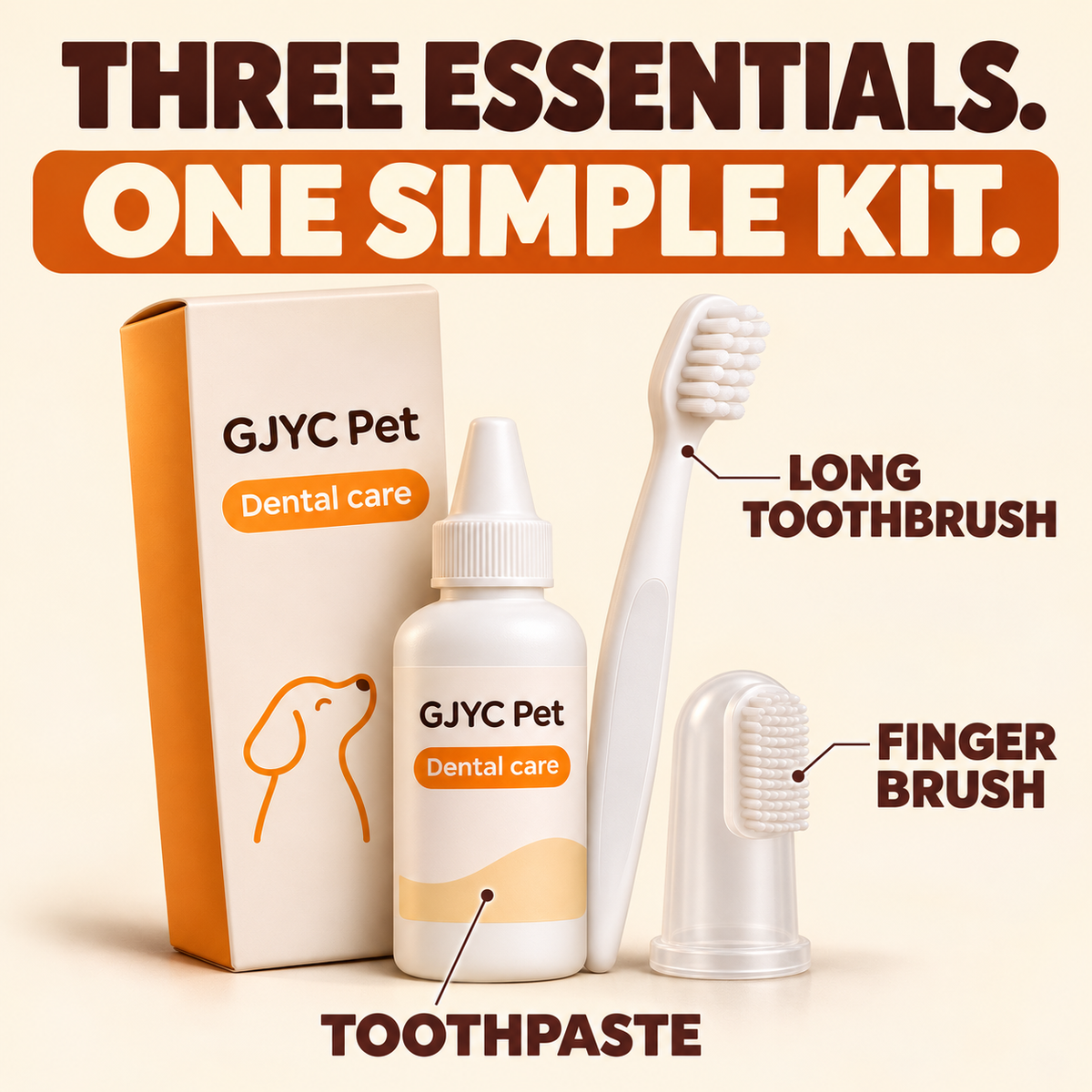
YOUR TOOLS, TOGETHER.
The GJYC Pet Dental Care Kit brings three essentials together, so you can explore one clearly defined starting set.
Complete kit delivered monthly.
Or €40 as a one-time purchase.
Review ingredients, brush fit, suitability and directions on the product page before ordering.
BEFORE YOU START
Build familiarity gradually. Stop if your dog is uncomfortable, and ask your vet for help with a suitable technique or alternatives.
No. Brushing removes soft plaque; established tartar needs professional removal. Ask your vet to assess visible deposits.
Some dental chews can help control plaque and tartar. Daily brushing remains an important home-care approach. Ask your vet which options suit your dog, especially if brushing is not possible. [1, 4]
Persistent bad breath can have different causes and should be assessed by your vet. A brushing kit is not a diagnosis or a guaranteed breath remedy.
No. Home care works alongside veterinary examinations, cleaning and treatment as advised.
One long toothbrush, one finger brush and one toothpaste. A complete kit is €25 per month with subscription, or €40 once. Review the product details and purchase terms before ordering.
Still considering your next step?
Start Their Daily Care